
How the Menlo Park Residents Directory Works
A useful resident search starts with a question, not a database. An address points first to a parcel and its APN. A name may lead to a recorded deed, a court index, a professional license, or a business filing. A past household needs a directory, census schedule, newspaper, or local-history collection. Each record describes a different relationship to Menlo Park, so one result should not be stretched into a claim about every person who lives at a place.
The county-centered trail is strongest for property, deeds, elections, court cases, and vital certificates. Menlo Park adds permits, planning files, public staff contacts, business-license records, police logs, and city requests. The library and the Menlo Park Historical Association fill the long view. A deed can show a titled party, but not every occupant. A voter self-lookup can confirm one person’s own record, but it cannot make a public street roll. Those limits make a cross-check more useful than a broad name list.
- Start with the parcel, case number, document number, entity number, or other stable fact you already have.
- Use the San Mateo County Property Information Portal or city GIS to separate an incorporated address from a county pocket.
- Search ACRE, the Superior Court, CDPH, bizfile, DCA, or the library collection that matches the question.
- Compare two independent facts, such as a middle initial and a dated address, before treating names as the same person.
- Use the counter, mail route, library, or a narrow CPRA request when the web index does not hold the needed record.
Menlo Park Directory Record Offices
Menlo Park is not the San Mateo County seat. Redwood City is. That matters because the county, rather than City Hall, controls deeds, assessment records, county vital copies, voter registration, and the Superior Court index. Menlo Park City Clerk, Building, Planning, Finance, Police, and library records answer local questions, but they do not replace the county custodians. ACRE combines assessor, clerk-recorder, and elections functions while keeping their record series distinct.
San Mateo ACRE Recorder
555 County Center, Redwood City
650-363-4500
San Mateo ACRE Assessor
555 County Center, Redwood City
ACRE public counter route
ACRE is open Monday through Friday, 8 a.m. to 5 p.m., excluding holidays, with appointments encouraged. City Hall is at 701 Laurel Street and its main line is 650-330-6600. The county clerk-recorder route covers vital records, fictitious business names, maps, and recorded instruments; the city open-government route handles municipal files.
The ACRE recorder and clerk overview separates the assessor’s parcel and assessment work from the recorder’s grantor-grantee index. The Superior Court holds Menlo Park case files, while CDPH handles statewide vital orders. The page also leads to the recorder service shown below.
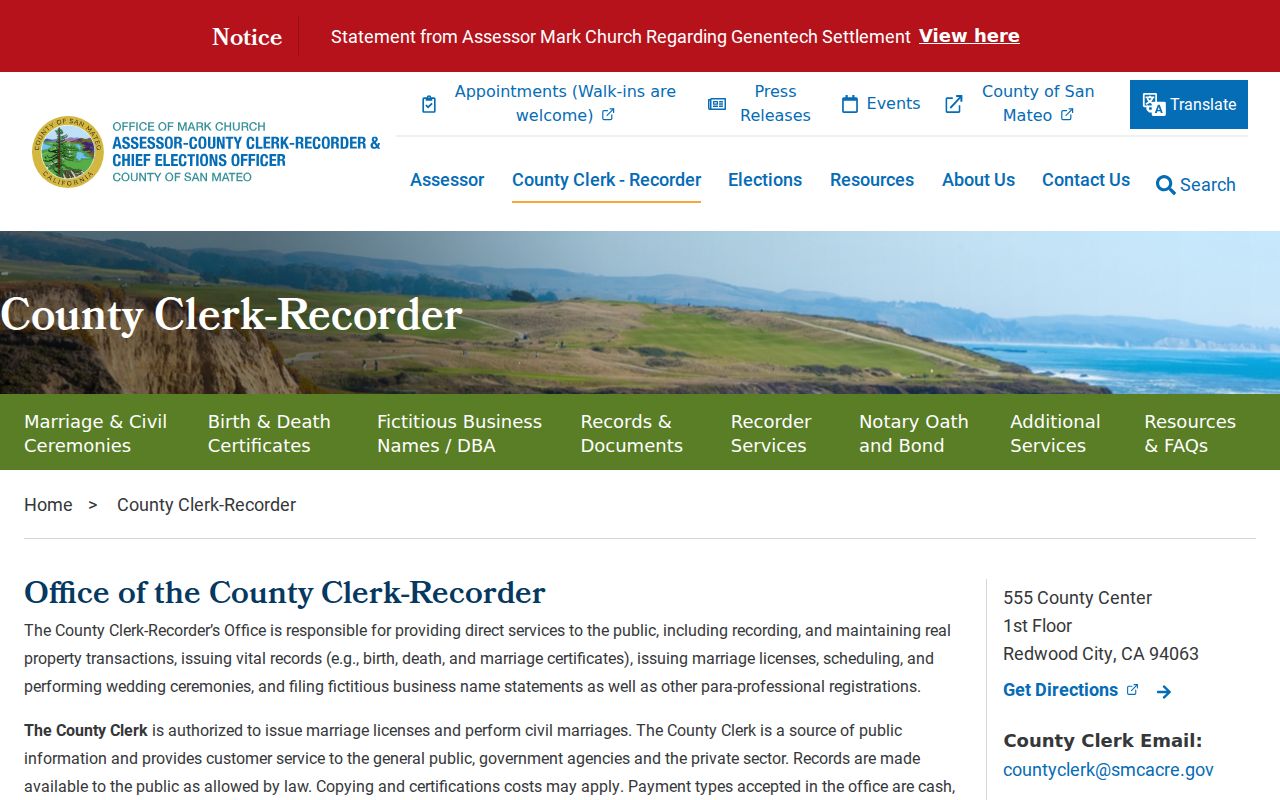
The county index is a lead, not a title opinion. Keep each custodian distinct as the search moves between record types.
Start With Menlo Park Records
“Menlo Park, CA” does not prove that a parcel is inside the incorporated city. West Menlo Park, Menlo Oaks, and North Fair Oaks may instead fall under unincorporated San Mateo County jurisdiction.
Use the county Property Information Portal and the Menlo Park GIS Hub to compare parcel, city-limit, ZIP, and service-district fields before choosing a permit or records office.
Jurisdiction check. A Menlo Park mailing city is a postal clue. The parcel’s within-city field and the responsible planning custodian decide which record trail to follow.
Current Menlo Park Resident Directories
Menlo Park has several directory-like sources, but each lists a different relationship. Staff records name public employees, property records name assessed owners or recorded parties, and election access is built for self-lookup rather than open browsing.
| Source | What It Can Show | Keeper | Access |
|---|---|---|---|
| Property Information Portal | Parcel, APN, situs, maps, building and district facts | San Mateo County GIS / Assessor | Free map; owner fields may be absent |
| Assessment roll | Assessed owner, value, exemption, mailing destination | San Mateo ACRE | Lawful counter or roll channel |
| RecorderWorks | Grantor, grantee, instrument and recording details | ACRE Recorder | Free index; copies cost by schedule |
| My Election Info | One voter’s own status, precinct and district data | San Mateo Elections | House number, ZIP, birth date |
| Menlo Park staff directory | Public employee or office contact | City of Menlo Park | Free name, title, department search |
The county elections entry point is for a person checking their own record. The city directory identifies public offices, while the Menlo Park resident lookup route sorts property, court, vital, business, and license evidence by question.
My Election Info explains the self-lookup and its limits. A street or ZIP cannot be turned into an ordinary public voter list.
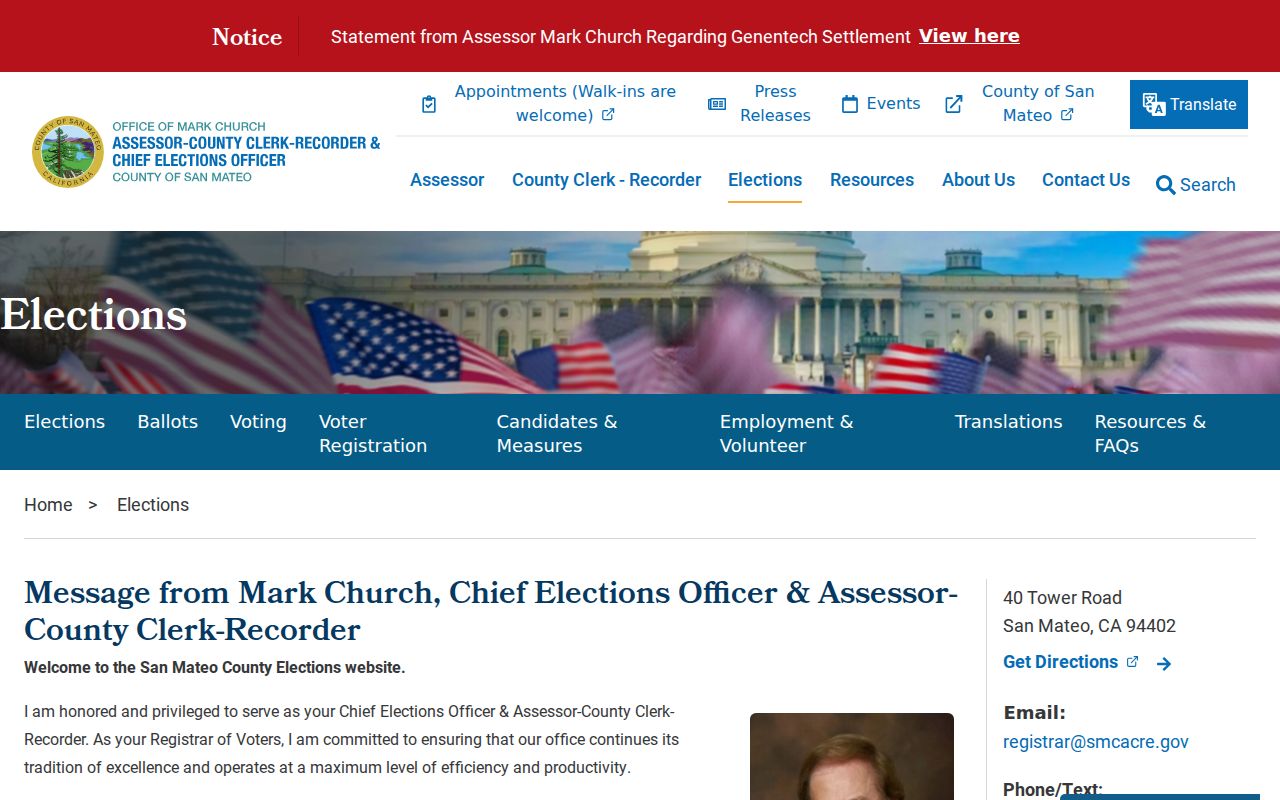
The election screen is a self-service check, not a resident directory. It belongs in a careful verification chain, not at the start of an unrestricted name harvest.
Menlo Park Directory Recorder Trails
RecorderWorks is free and needs no login. Name-searchable property documents begin in 1985; the computer index reaches 1963; earlier material is at the recorder counter on microfilm. For 1963-84, carry a document number or date. Before 1980, book and page remain useful.
Search a current grantee, note the grantor and legal description, then search that seller as a grantee. The form supports LAST FIRST, party role, partial match, document type, dates, document number, book/page, parcel number, and name combinations. Trusts, entities, initials, and punctuation can change results.
| Search route | Name, document number, book/page, recording date, document type, or parcel number |
|---|---|
| Name fields | Last, first, middle, role, partial match, and all-name combinations |
| Legacy bridge | Book/page before 1980; document number and date for many 1963-84 records |
| Copy route | Recorder counter or mail order; current schedule lists $5 first page, $1 each extra page, certification plus $5, conformed label $10 |
An index is not the recorded image. An image or certified copy is stronger for legal descriptions and signatures, while a deed still shows ownership evidence rather than occupancy. Begin at RecorderWorks and save the date, parcel, and document number at each step.
Menlo Park Assessment Roll Limits
The assessment roll connects an APN to an assessed owner, values, exemptions, and a mailing destination. The county map adds situs, legal description, subdivision, and district context. A mailing address is a clue, not proof of occupancy.
The public Menlo Park parcel layer does not expose owner or owner-mailing fields. It does expose APN, within-city status, map book/page/block/lot, last sale, zoning, use, year built, units, historic, flood, seismic, census, and district data. Use ACRE for lawful roll access and RecorderWorks for named parties.
- Roll
- A government list or accounting record, such as the assessment roll, that groups facts by parcel or taxpayer.
- Parcel
- A mapped legal unit with an APN, boundaries, and a legal description.
- Situs address
- The physical location of the parcel, distinct from the mailing address used for notices.
- Index
- A finding aid that points to a record; it is not always the record image or a certified copy.
Owner is not occupant. Property, deed, and map records can support an address trail. They should not be presented as a complete list of the people who live there.
Menlo Park Residents Directory Court Lookup
Menlo Park has no municipal court. San Mateo Superior Court handles civil, criminal, family, probate, small-claims, and traffic matters. MIDX and Odyssey search nonconfidential cases by case number, party name, and filing date; Smart Search accepts an asterisk wildcard.
A result may show a case number, caption, category, filing date, status, docket event, hearing, or enabled document. A docket is not the pleading or judgment. Adoption, juvenile, mental-health, sealed, and other protected matters stay out of the public view. Converted cases from 2000 through June 15, 2016 can use older prefixes.
- Try the exact party name, initials, and a wildcard only when the search is broad.
- Record the case category, filing date, and case number before opening a document.
- Separate an allegation, a docket event, and a final disposition in notes.
- Use the Records Management counter or mail route when a public file is not enabled online.
Records Management is at 400 County Center in Redwood City. Up to five files may be requested; offsite retrieval is generally 72 hours with a $10 fee. Mail requests need the case number, parties, date or document, a stamped envelope, and a capped check. Federal matters use PACER.
The San Mateo Superior Court case-access page shows the official public search choices and restrictions.
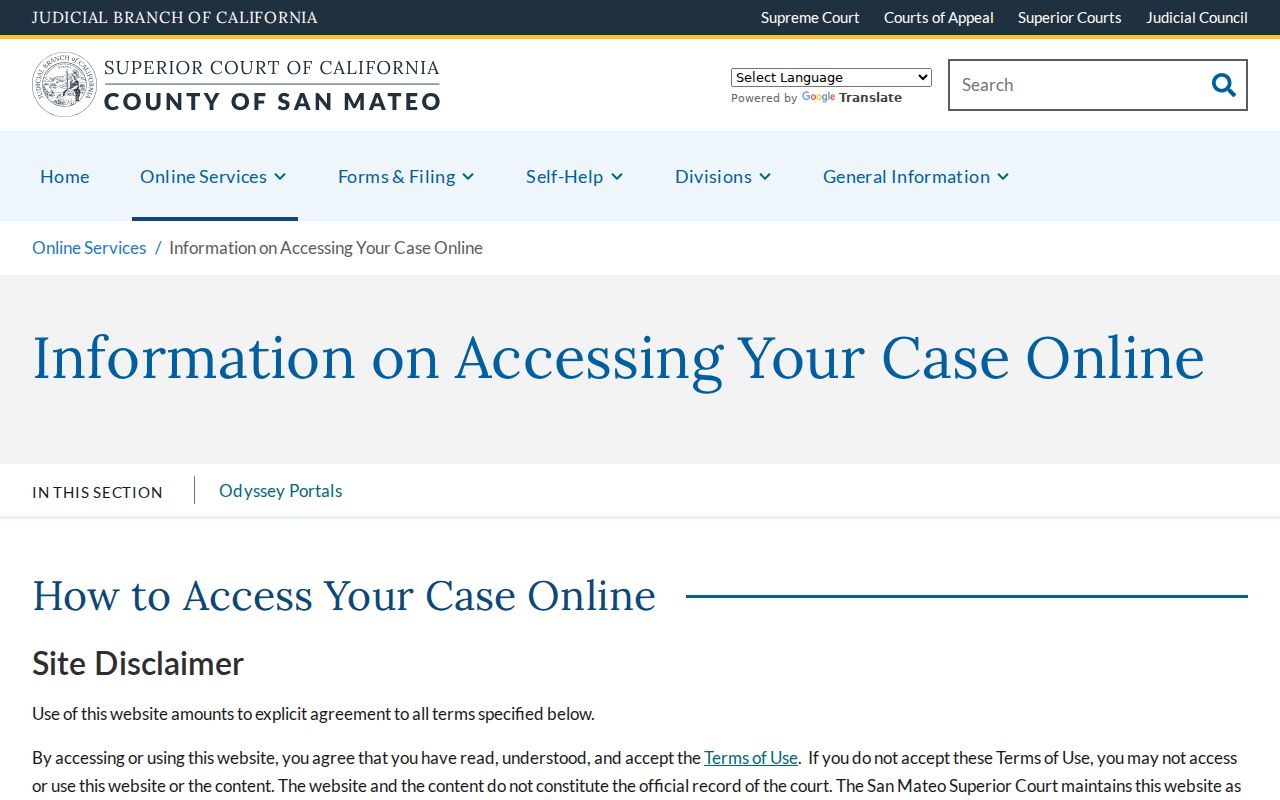
The court portal is a narrow name-check tool. A missing public docket does not prove that no court record exists.
Menlo Park Vital Record Copies
San Mateo ACRE is the local route for a known county birth, death, or marriage. CDPH Vital Records is statewide. Birth records exist statewide since July 1905, but public indexes are not certified certificates, and modern copies use eligibility categories rather than one opening date.
Authorized copies require an eligible requester and statement; informational copies are marked invalid for identity. Confidential marriage certificates are limited by Family Code section 509. CDPH’s 2026 schedule lists $31 birth, $26 death, $19 marriage, $18 dissolution, and $23 fetal-death copies. County counter, CDPH mail, and authorized electronic routes have different rules. If no record is found, the state retains the search fee.
Menlo Park Residents Directory Voter Limits
My Election Info asks for house number, five-digit ZIP, and birth date. It returns one person’s status, party, precinct, districts, and selected-election details. It is not a name directory or street browser.
Elections Code sections 2188 and 2194 and Government Code section 7924.000 restrict voter-file access and protect contact fields, signatures, and identifiers. Full-file requests need a permitted purpose, security details, identification, signatures, and fees. Confidential voters and Safe at Home participants receive stronger protection.
Menlo Park Permit Timelines
Accela gives a Menlo Park address a municipal project history. General Search accepts record, project, date, street, unit, APN, person, business, and license fields. Results may show a project contact, scope, valuation, status, issue or final date, and approved set, not every occupant.
Search Applications is public, while applications and uploads need an account. Older Tidemark records may need staff or CPRA retrieval. Code cases can contain notices, inspections, correspondence, and resolution, with sensitive or open-investigation material withheld. Ask by address, APN, record type, and date.
The Menlo Park staff directory helps identify the department or public contact for a permit or records question. It is a directory of public offices, not a roll of residents.
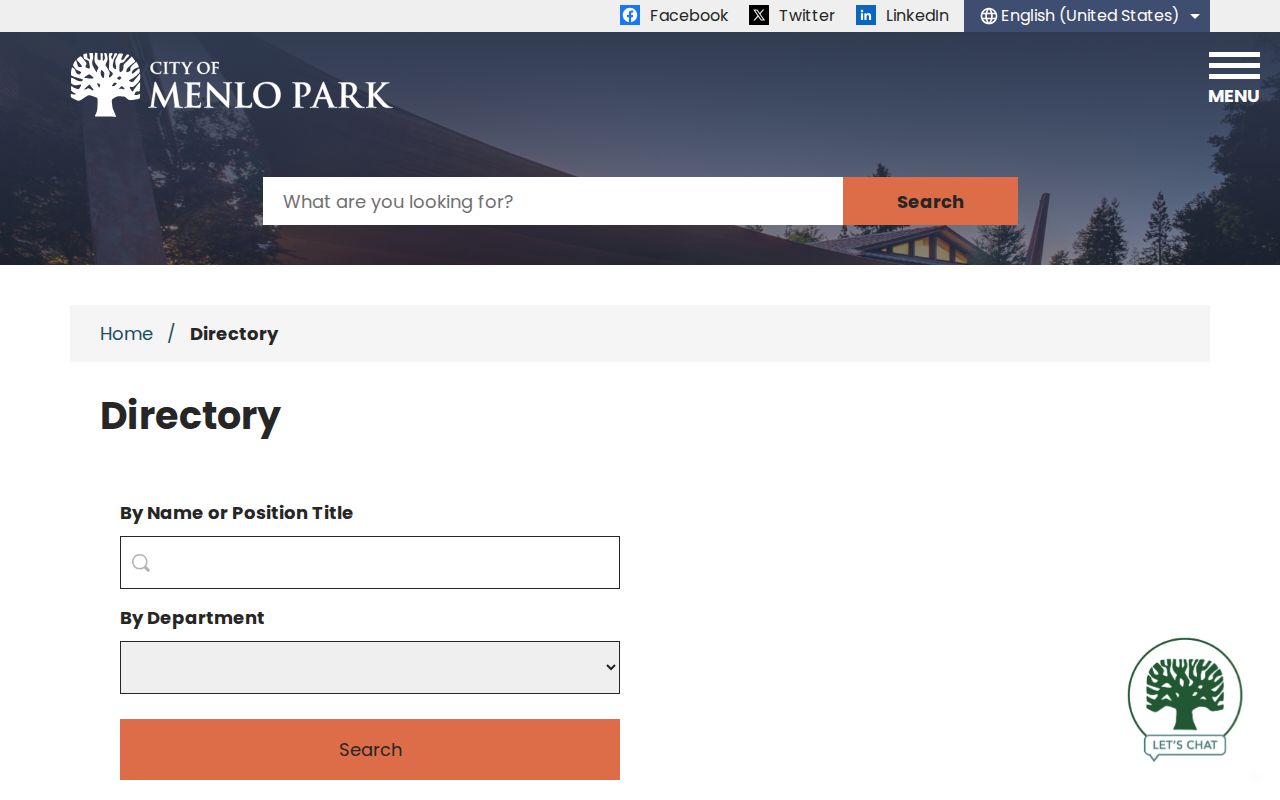
The staff search is a public office directory, not a resident roll, but it can route a permit request correctly.
Menlo Park Directory Clues for Heirs
Family-history questions may point to probate, a yearbook, an obituary, or an MPHA photograph. A business clue may lead to a California entity, San Mateo fictitious business name, or Menlo Park license. These sources supply names and dates, not home-address proof.
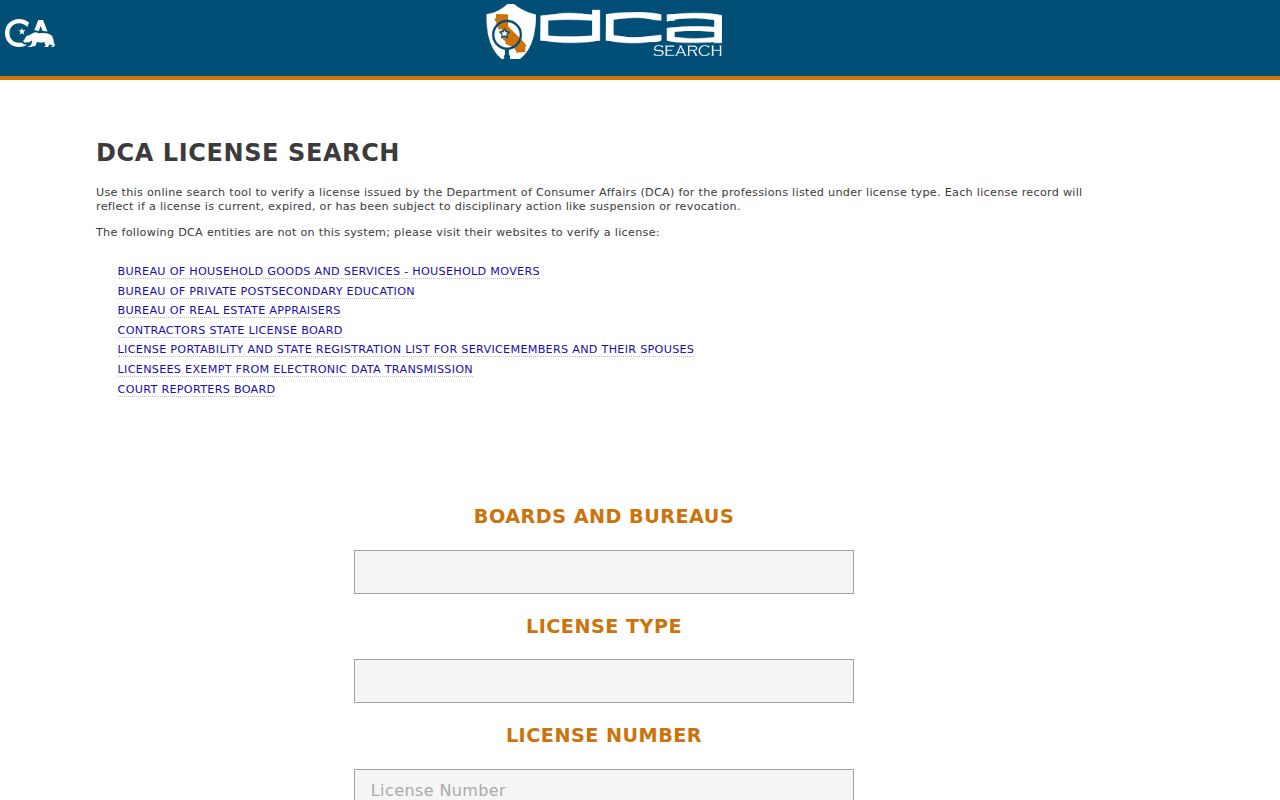
Bizfile can show entity status, type, agent, officers or managers, addresses, and filings. San Mateo FBN records tie a trade name to registrants and dates; a statement generally runs five years. DCA License Search can show license status and public contact details, depending on the board.
The California bizfile search is the right official route for an entity clue.
Use an entity number or filing document as the anchor. A business address is an affiliation, not residence proof.
The California Department of Consumer Affairs license search is free, though some boards use separate systems.
The State Controller’s unclaimed-property search is free; a claim needs proof of identity or ownership and can tie a name to a former city or ZIP.
Menlo Park Lookup Fallbacks
Online search is one channel. City records can be requested through the Menlo Park public-records page, which routes to GovQA/MyCustHelp. Name the department, record type, address or person, and date range; ask for existing records.
The recorder counter and microfilm, library reference desk, court counter and mail route, CDPH mail order, and ACRE appointments fill the gaps left by online indexes.
- Write the custodian, record series, name or address, and date range before contacting an office.
- Ask whether the record is online, at a counter, on microfilm, in a library collection, or held offsite.
- Request an index first when a document number, case number, APN, or volume/page will narrow the next step.
- Check fees and copy rules on the official office page before mailing payment.
The California Public Records Act, Government Code sections 7920.000-7931.000, covers nonexempt agency records. It does not override vital, voter, sealed-court, Safe at Home, or other confidentiality laws, and it does not require a resident list. A narrow request works better than asking for everyone at a place.
Historical Menlo Park Residents Directory Sources
Older Menlo Park residents may be in a Palo Alto or wider Peninsula volume. NARA confirms its 1929-31 Palo Alto run includes Menlo Park. A 1922 regional directory is verified, and a 1978-80 Menlo Park run is held at San José Public Library’s California Room. Publishers and a complete reverse run still need confirmation.
The Merrill History Room and MPHA add indexed photographs, oral histories, *The Gate Post* from 1975 onward, and bound *The Almanac* from the 1970s and 1980s. Pair a directory with the 1930 or 1950 census, and remember that Atherton 1923, Menlo Park 1927, and Belle Haven 1961 changed headings without requiring a move. The fuller shelf treatment is in the Menlo Park city directory section.
Menlo Park Privacy Boundaries
Safe at Home gives eligible people a substitute mailing address under Government Code sections 6205-6216, but it does not erase a property legal description. Voter files, DMV information, court cases, vital certificates, and law-enforcement records each have separate limits.
Corrections go to the source custodian. A broker opt-out, including the state’s DROP route, does not change that source. Keep requests narrow, respect protected status, and never turn a lawful record into a tool for following or intimidating anyone.
Lawful personal use. Menlo Park records support family history, property research, civic review, and personal reconnection. Using address or identity data to stalk, harass, threaten, or harm a person can violate California law.
Menlo Park Records in 2025-26
Citizen RIMS replaced Menlo Park Police’s former open-data route in June 2025. It maps calls and case reports and shows recent adult arrests, but it is screened public data. A February 2025 Accela update reported 4,507 municipal records in fiscal year 2023-24.
AB 64 changed CDPH vital fees on January 1, 2026, and DROP began accepting consumer requests in January 2026. Check current official pages for fees, forms, portals, and privacy instructions. Menlo Park’s trail still runs from local map to county index to state or historical custodian.