
How the Menlo Park Residents Directory Works
Start with a question, not a database. An address leads to a parcel and its APN. A name might surface in a recorded deed, a court index, or a professional license. It might also appear in a business filing. A past household calls for a city directory, census schedule, newspaper, or local-history collection. Each record describes a different relationship to Menlo Park. Stretching one result into a claim about everyone at an address is a mistake.
The county trail is strongest for property, deeds, elections, court cases, and vital certificates. Menlo Park itself adds permits, planning files, and staff contacts. Business-license records, police logs, and public requests come from the city too. The library and the Menlo Park Historical Association cover the long view. Remember the limits. A deed names a titled party, not every occupant. A voter self-lookup confirms one person's own record but builds no public street roll. Cross-checking beats any broad name list.
- Start with the parcel, case number, document number, entity number, or other stable fact you already have.
- Use the San Mateo County Property Information Portal or city GIS to separate an incorporated address from a county pocket.
- Search ACRE, the Superior Court, CDPH, bizfile, DCA, or the library collection that matches the question.
- Compare two independent facts, such as a middle initial and a dated address, before treating names as the same person.
- Use the counter, mail route, library, or a narrow CPRA request when the web index does not hold the needed record.
Menlo Park Directory Record Offices
Menlo Park is not the San Mateo County seat; Redwood City is. That matters for a residents directory. The county controls deeds, assessment records, county vital copies, voter registration, and the Superior Court index rather than City Hall. City offices still answer local questions. The Menlo Park City Clerk, Building, Planning, Finance, Police, and library records handle municipal matters. None replaces the county custodians. ACRE merges assessor, clerk-recorder, and elections functions while keeping each record series separate.
San Mateo ACRE Recorder
555 County Center, Redwood City
650-363-4500
San Mateo ACRE Assessor
555 County Center, Redwood City
ACRE public counter route
ACRE keeps weekday hours, Monday through Friday, 8 a.m. to 5 p.m. It is closed on holidays. Appointments are encouraged. City Hall sits at 701 Laurel Street, and its main line is 650-330-6600. The county clerk-recorder route covers vital records, fictitious business names, maps, and recorded instruments. The city's open-government path handles municipal files. The ACRE recorder and clerk overview separates the assessor's parcel and assessment work from the recorder's grantor-grantee index. The Superior Court holds Menlo Park case files, and CDPH handles statewide vital orders. The same county page leads to the recorder service described next.
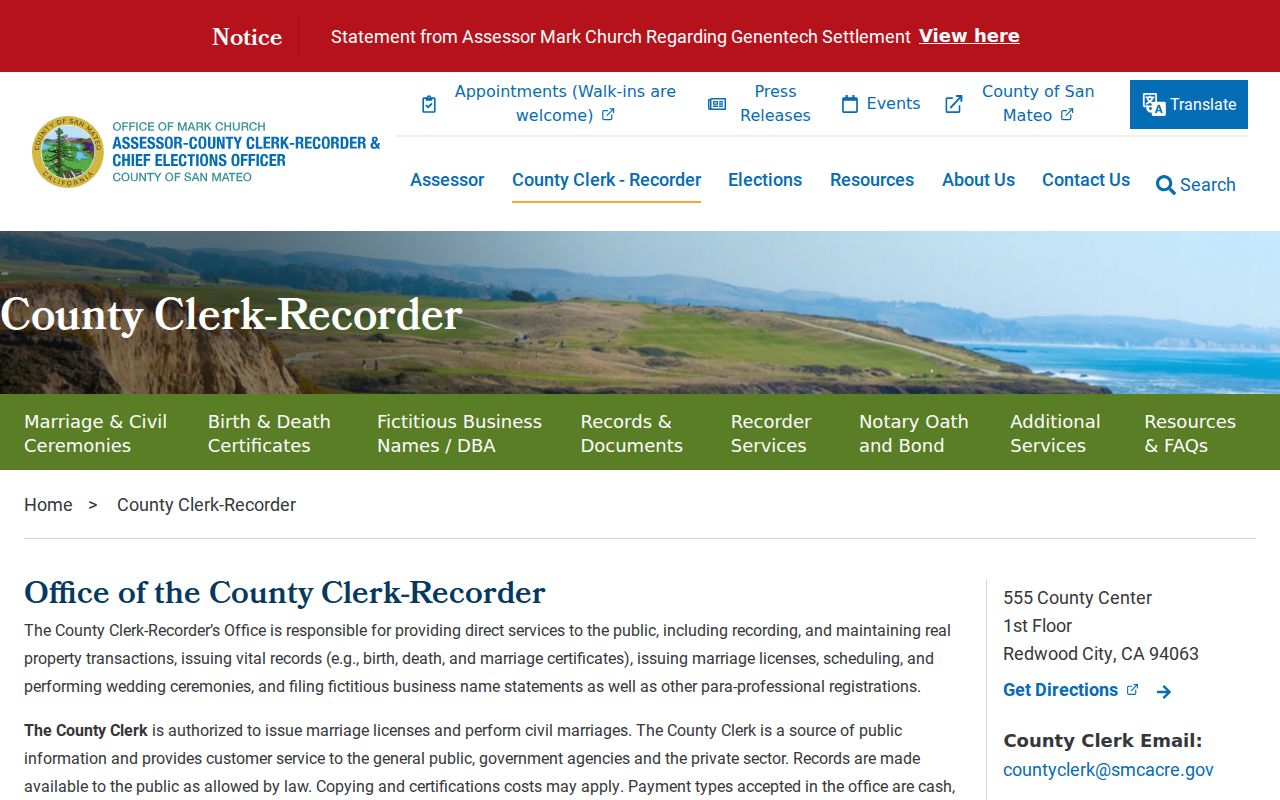
Note: Treat the county index as a lead, not a title opinion, and keep each record custodian distinct as the search moves between record types.
Start With Menlo Park Records
A "Menlo Park, CA" mailing address does not prove a parcel sits inside the incorporated city. The address alone can mislead. West Menlo Park, Menlo Oaks, and North Fair Oaks may instead fall under unincorporated San Mateo County jurisdiction. Compare the fields first. Use the county Property Information Portal and the Menlo Park GIS Hub to check parcel, city-limit, ZIP code directory, and service-district data. Pick a permit or records office after that.
Jurisdiction check. A Menlo Park mailing city is a postal clue. The parcel’s within-city field and the responsible planning custodian decide which record trail to follow.
Current Menlo Park Resident Directories
Menlo Park offers several directory-like sources, but no single one lists everyone. Staff records name public employees. Property rolls name assessed owners or recorded parties. Election access is built for self-lookup rather than open browsing, so each source answers a different question about who lives in Menlo Park.
| Source | What It Can Show | Keeper | Access |
|---|---|---|---|
| Property Information Portal | Parcel, APN, situs, maps, building and district facts | San Mateo County GIS / Assessor | Free map; owner fields may be absent |
| Assessment roll | Assessed owner, value, exemption, mailing destination | San Mateo ACRE | Lawful counter or roll channel |
| RecorderWorks | Grantor, grantee, instrument and recording details | ACRE Recorder | Free index; copies cost by schedule |
| My Election Info | One voter’s own status, precinct and district data | San Mateo Elections | House number, ZIP, birth date |
| Menlo Park staff directory | Public employee or office contact | City of Menlo Park | Free name, title, department search |
The county elections entry point exists for a person checking their own record. The city directory identifies public offices, while the Menlo Park resident lookup route sorts property, court, vital, business, and license evidence by question. My Election Info explains how the self-lookup works and where it stops. No street or ZIP can be converted into an ordinary public voter list.
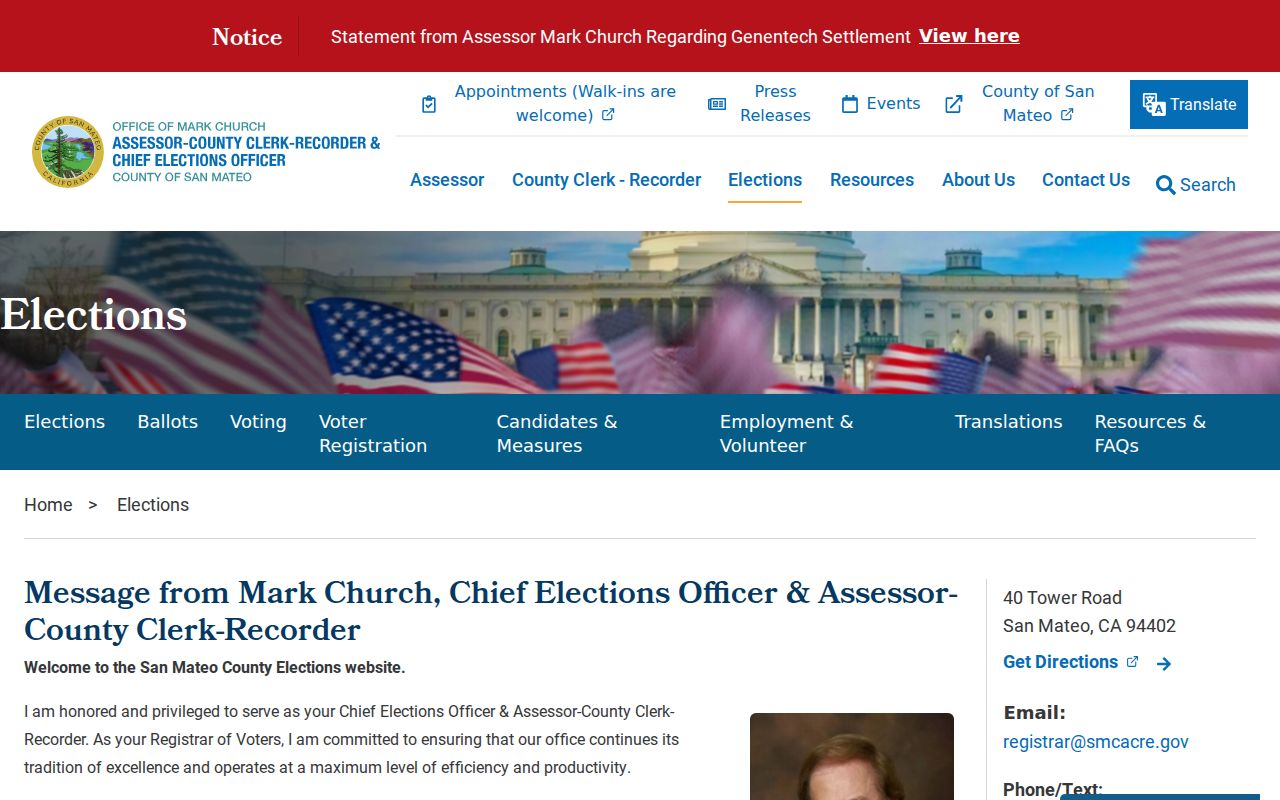
The election screen is a self-service check, not a residents directory. It belongs in a careful verification chain, not at the front of an unrestricted name harvest.
Menlo Park Directory Recorder Trails
RecorderWorks is free and needs no login. Name-searchable property documents begin in 1985, and the computer index reaches back to 1963. Earlier material waits at the recorder counter on microfilm. For 1963 through 1984, bring a document number or date. Before 1980, book and page references still help. A useful trail runs in two steps: search a current grantee, note the grantor and legal description, then search that seller as a grantee. The form accepts LAST FIRST format, party role, partial matches, document type, dates, document number, book and page, parcel number, and name combinations. Trusts, entities, initials, and punctuation can all shift results.
| Search route | Name, document number, book/page, recording date, document type, or parcel number |
|---|---|
| Name fields | Last, first, middle, role, partial match, and all-name combinations |
| Legacy bridge | Book/page before 1980; document number and date for many 1963-84 records |
| Copy route | Recorder counter or mail order; current schedule lists $5 first page, $1 each extra page, certification plus $5, conformed label $10 |
An index entry is not the recorded image. An image or certified copy is stronger evidence for legal descriptions and signatures, though even a deed shows ownership rather than occupancy. Begin at RecorderWorks and save the date, parcel, and document number at each step of the recorder trail.
Menlo Park Assessment Roll Limits
An assessment roll ties an APN to the assessed owner. It also covers values, exemptions, and a mailing address. The county map adds situs, legal description, subdivision, and district context. Treat a mailing address as a clue, not as proof anyone lives there. Menlo Park's public parcel layer takes the same cautious line. It publishes no owner or owner-mailing fields. What it does show for a Menlo Park parcel is APN, within-city status, map book, page, and block. It also lists lot, last sale, zoning, use, year built, units, historic status, flood and seismic data, census detail, and districts. For lawful roll access, use ACRE; for named parties, use RecorderWorks. That split keeps the residents directory honest about what each records office actually releases.
- Roll
- A government list or accounting record, such as the assessment roll, that groups facts by parcel or taxpayer.
- Parcel
- A mapped legal unit with an APN, boundaries, and a legal description.
- Situs address
- The physical location of the parcel, distinct from the mailing address used for notices.
- Index
- A finding aid that points to a record; it is not always the record image or a certified copy.
Owner is not occupant. Property, deed, and map records can support an address trail. They should not be presented as a complete list of the people who live there.
Menlo Park Residents Directory Court Lookup
Menlo Park has no municipal court. San Mateo Superior Court handles civil, criminal, family, probate, small-claims, and traffic matters for the city. Two portals serve a Menlo Park residents directory court lookup: MIDX and Odyssey search nonconfidential cases by case number, party name, and filing date. Smart Search even accepts an asterisk wildcard. A result may show a case number, caption, category, filing date, status, docket event, hearing, or an enabled document. A docket entry is not the pleading or the judgment. Adoption, juvenile, mental-health, sealed, and other protected matters stay out of public view, and converted cases from 2000 through June 15, 2016 may still use older prefixes.
- Try the exact party name, initials, and a wildcard only when the search is broad.
- Record the case category, filing date, and case number before opening a document.
- Separate an charge, a docket event, and a final disposition in notes.
- Use the Records Management counter or mail route when a public file is not enabled online.
Records Management sits at 400 County Center in Redwood City. You may request up to five files at once. Offsite retrieval generally takes 72 hours and carries a $10 fee. Mail requests need the case number, parties, and the date or document. They also require a stamped envelope and a capped check. Federal matters go through PACER. The San Mateo Superior Court case-access page lists the official public search options and their restrictions.
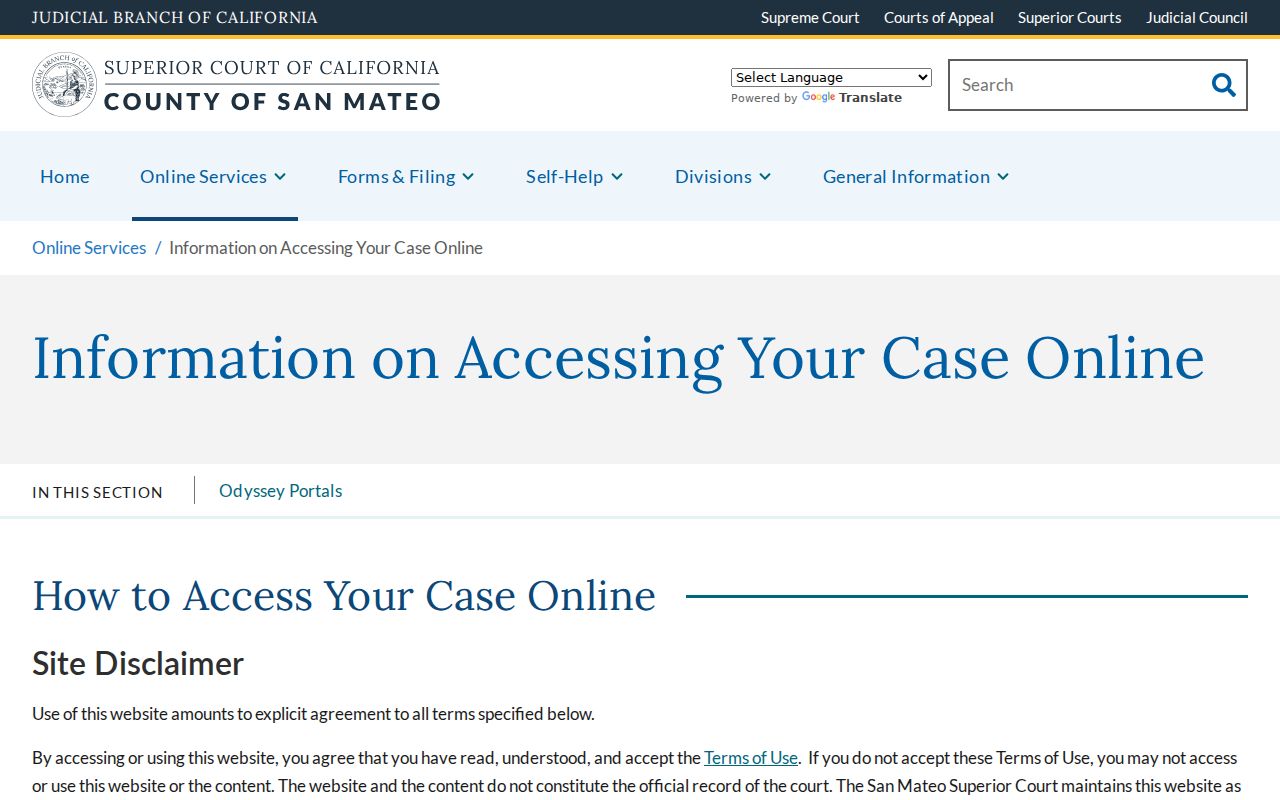
The court portal is a narrow name-check tool, not a full city directory. A missing public docket proves nothing about whether a court record exists.
Menlo Park Vital Record Copies
San Mateo ACRE is the local route for a known county birth, death, or marriage record. CDPH Vital Records covers the whole state. Birth records exist statewide since July 1905, but public indexes are not certified certificates. Modern copies turn on eligibility categories instead of one opening date. Authorized copies require an eligible requester and a sworn statement. Informational copies are marked invalid for identity purposes. Confidential marriage certificates stay limited under Family Code section 509. CDPH's 2026 fee schedule lists $31 for birth, $26 for death, $19 for marriage, $18 for dissolution, and $23 for fetal-death copies, while the county counter, CDPH mail, and authorized electronic routes each carry their own rules. If no record turns up, the state keeps the search fee.
Menlo Park Residents Directory Voter Limits
My Election Info asks for a house number, five-digit ZIP, and birth date. It returns one person's status, party, precinct, districts, and selected-election details. It is not a name directory or a street browser for Menlo Park. Elections Code sections 2188 and 2194 restrict voter-file access. Government Code section 7924.000 shields contact fields, signatures, and identifiers. Full-file requests require a permitted purpose, security details, identification, signatures, and fees. Confidential voters and Safe at Home participants get stronger protection still. That keeps any residents directory from doubling as a voter roll.
Menlo Park Permit Timelines
Accela gives a Menlo Park address a municipal project history. General Search accepts record, project, date, street, unit, APN, person, business, and license fields. Results may show a project contact and scope. They may also show valuation, status, issue or final date, and an approved set. It does not list every occupant. Search Applications is public. Applications and uploads need an account. Older Tidemark records may require staff or CPRA retrieval. Code cases can contain notices, inspections, correspondence, and resolution. Sensitive or open-investigation material is withheld, so ask by address, APN, record type, and date. The Menlo Park staff directory helps identify the right department or public contact for a permit or records question. It is a directory of public offices, not a roll of residents.
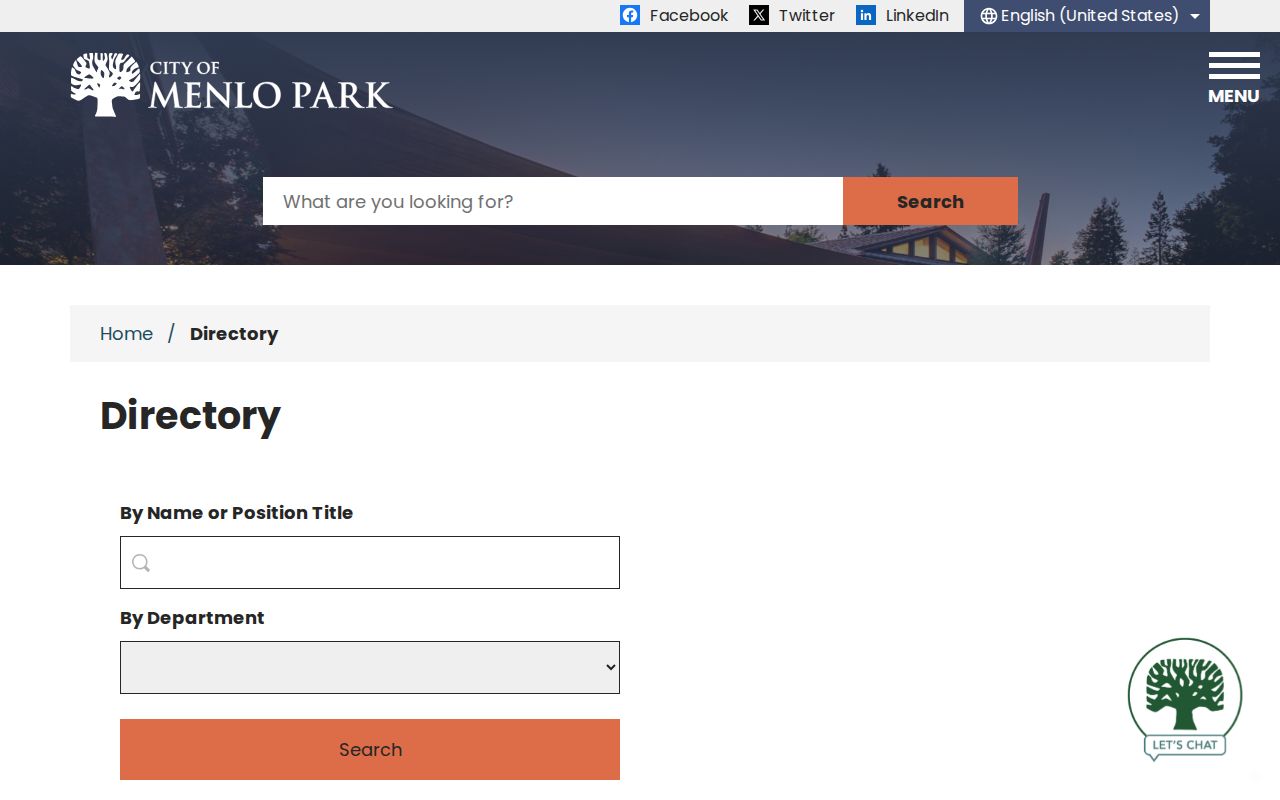
The staff search is a public office directory, not a resident roll. Even so, it routes a Menlo Park permit or records request to the right desk.
Menlo Park Directory Clues for Heirs
Family-history questions may point toward probate, a yearbook, an obituary, or an MPHA photograph. A business clue may lead to a California entity. It could also point to a San Mateo fictitious business name or a Menlo Park license. These sources supply names and dates, never home-address proof. Bizfile can show entity status, type, agent, officers or managers, addresses, and filings. San Mateo FBN records tie a trade name to registrants and dates. A statement generally runs five years. DCA License Search can show license status and public contact details, depending on the board. For an entity clue, the California bizfile search is the right official route.
Anchor the search in an entity number or filing document. A business address is an affiliation, not residence proof. The California Department of Consumer Affairs license search is free, though some boards use separate systems.
The State Controller's unclaimed-property search is free. A claim needs proof of identity or ownership, and a match can tie a name to a former city or ZIP code directory entry.
Menlo Park Lookup Fallbacks
Online search is only one channel. City records can be requested through the Menlo Park public-records page. That page routes to GovQA/MyCustHelp. Name the department, record type, address or person, and date range. Ask for existing records rather than a general resident list. The recorder counter and microfilm, the library reference desk, the court counter and mail route, CDPH mail orders, and ACRE appointments fill the gaps. Online indexes leave those gaps open.
- Write the custodian, record series, name or address, and date range before contacting an office.
- Ask whether the record is online, at a counter, on microfilm, in a library collection, or held offsite.
- Request an index first when a document number, case number, APN, or volume/page will narrow the next step.
- Check fees and copy rules on the official office page before mailing payment.
The California Public Records Act, Government Code sections 7920.000-7931.000, covers nonexempt agency records. It does not override vital, voter, sealed-court, Safe at Home, or other confidentiality laws. It also does not require an agency to build a resident list. A narrow request works far better than asking for everyone at a place.
Historical Menlo Park Residents Directory Sources
Older Menlo Park residents often appear in volumes that covered the wider Peninsula. NARA's Palo Alto run from 1929 through 1931 includes Menlo Park. A 1922 regional directory also survives. San José Public Library's California Room holds a 1975-onward Menlo Park strand. A 1978-80 run sits there too. Publishers for some editions remain unconfirmed. No complete reverse street directory for the city has surfaced yet.
The Merrill History Room and MPHA widen the shelf. Indexed photographs, oral histories, and *The Gate Post* from 1975 onward all sit beside the residents directory volumes. Bound issues of *The Almanac* from the 1970s and 1980s join them. Pair any directory with the 1930 or 1950 census for cross-checking. One caution helps. Atherton 1923, Menlo Park 1927, and Belle Haven 1961 all changed street headings. No one had moved. The fuller shelf treatment lives in the Menlo Park city directory section.
Menlo Park Privacy Boundaries
Safe at Home gives eligible people a substitute mailing address under Government Code sections 6205-6216, but it does not erase a property legal description. Voter files, DMV information, court cases, vital certificates, and law-enforcement records each have separate limits.
Corrections go to the source custodian. A broker opt-out, including the state’s DROP route, does not change that source. Keep requests narrow, respect protected status, and never turn a lawful record into a tool for following or intimidating anyone.
Lawful personal use. Menlo Park records support family history, property research, civic review, and personal reconnection. Using address or identity data to stalk, harass, threaten, or harm a person can violate California law.
Menlo Park Records in 2025-26
Menlo Park Police swapped its old open-data route for Citizen RIMS in June 2025. It maps calls and case reports. Recent adult arrests also appear, as screened public data. A February 2025 Accela update reported 4,507 municipal records for fiscal year 2023-24.
AB 64 changed CDPH vital fees January 1, 2026. DROP began taking consumer requests that same month. Menlo Park's trail still runs from local map to county index to state or historical custodian, so check official pages for current fees, forms, portals, and privacy steps.